
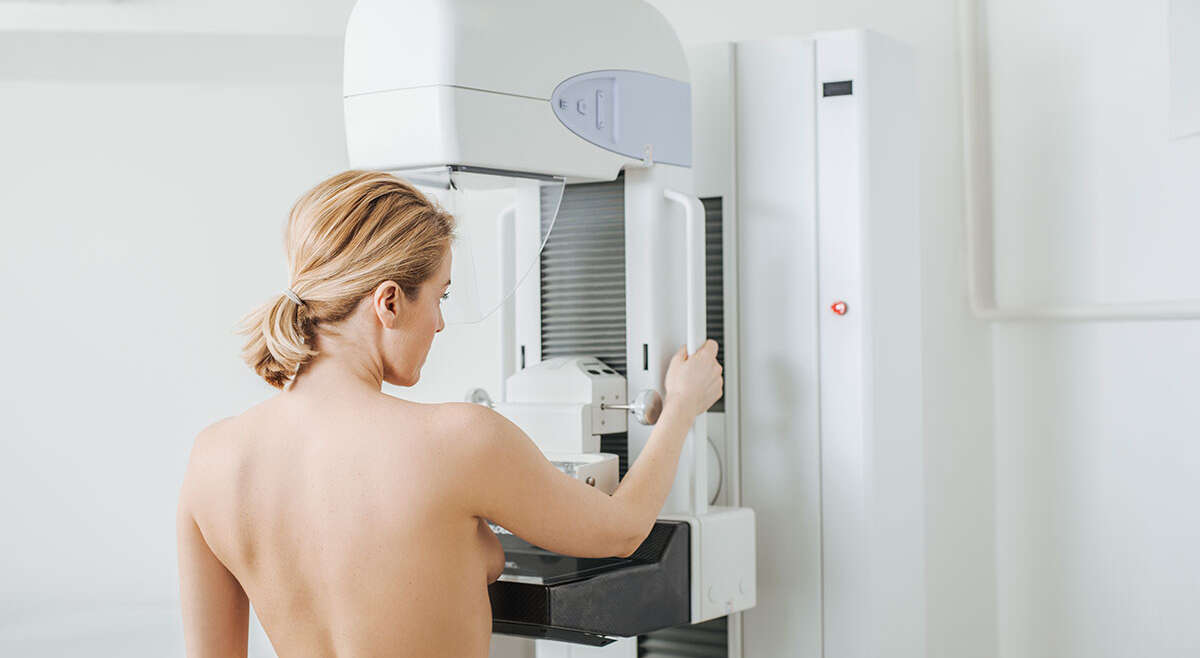
MAMMOGRAM/TOMOGRAPHY
Mammography is the best screening method for asymptomatic women. Nowadays, the digital mammography method prevails, as it provides greater diagnostic accuracy, while emitting 30-40% less radiation than the classic one. During the examination, 2 static images are taken of each breast, which significantly helps in the early diagnosis of cancerous lesions. Tomosynthesis, the three-dimensional (3D) digital mammography, is the evolution of digital mammography with the use of the latest technology. It is recommended in cases of dense breast tissue as it provides even greater precision in the results. It requires fewer repeat examinations, fewer biopsies, while it involves less pressure and pain in the breast. Dr. Papadogiannakis will recommend the most suitable examination for you, based on your history or any findings.
BREAST ULTRASOUND
Ultrasound or breast ultrasound works in addition to mammography and contributes to the detection and diagnosis of tumors and other abnormalities. It is recommended for women who avoid radiation such as pregnant and lactating women, women under 25 and women with breast implants. Breast ultrasound shows the location and shape of the finding and helps to distinguish cysts from lumps. Moreover, with the ultrasound, the movement and flow of blood inside the breast is visualized. Dr. Papadogiannakis has the latest technology equipment that offers top image quality and accurate results and he will explain the procedure in detail.
MAGNETIC RESONANCE IMAGING (MRI)
MRI is one of the most valuable tools in the treatment of breast cancer, as it is more accurate than mammography and breast ultrasound and is indicated for women with a high chance of developing breast cancer, especially those with a family history. The best time for a woman to undergo a breast MRI is in the second week of menstruation (7th to 14th day) to avoid false positive findings. The process is simple and does not require any special preparation.